
Late updated: 26 Dec 2025 13:12
Written by: James Whitaker
Creating A Zen Flower Garden For Relaxation: A Tranquil Oasis Guide
Embrace the tranquillity and beauty of a Zen flower garden, where the art of gardening meets mindfulness and relaxation. These gardens offer a perfect fusion of serenity and visual appeal, creating an oasis where we can unwind and immerse ourselves in nature. Creating a Zen flower garden involves carefully combining elements like rocks, water, and greenery to foster a meditative atmosphere.
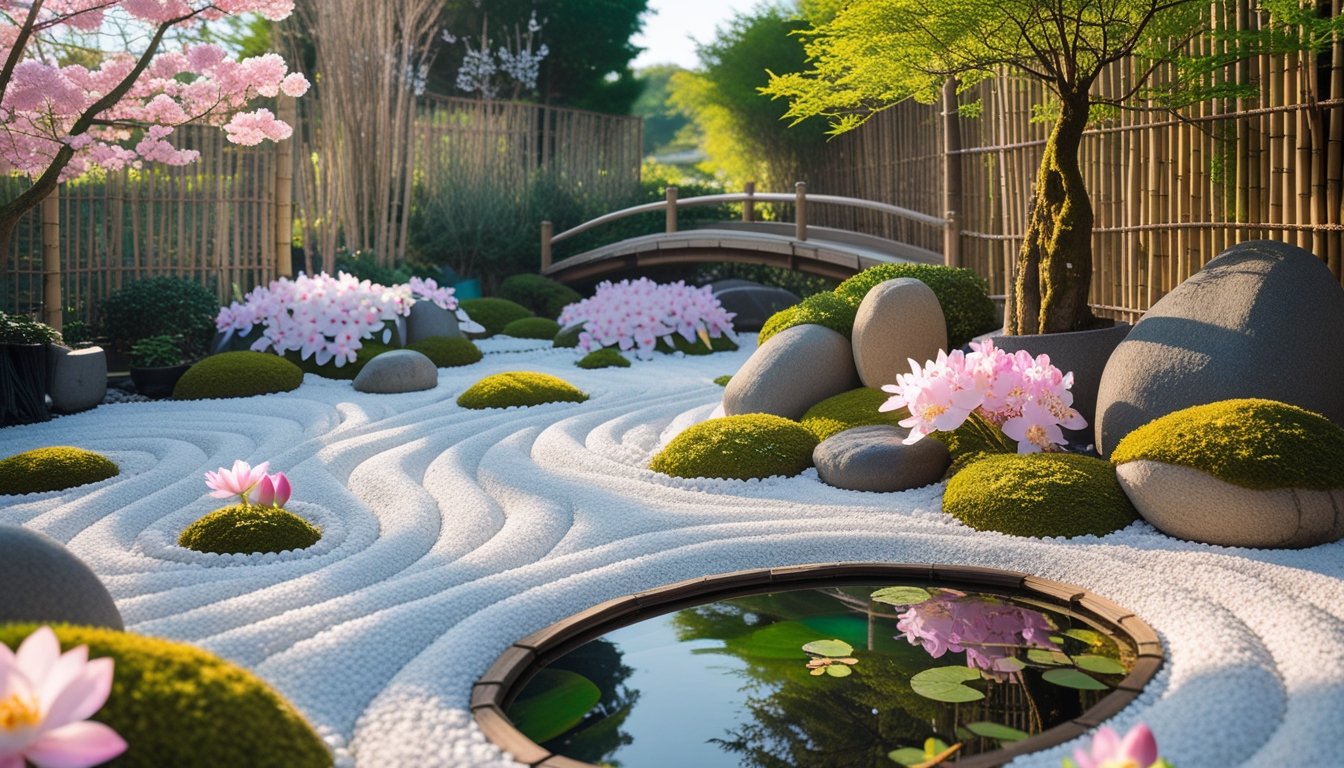
In our fast-paced world, finding a peaceful sanctuary in our own backyard can be the ultimate stress reliever. By incorporating the simplicity and harmony of Zen principles into our garden design, we can cultivate a space that not only nurtures the soul but also celebrates the elegance of natural beauty. Selecting the right plants, designing pathways, and integrating soothing water features are key steps to achieving this balance.
A personalised Zen flower garden becomes a living art piece, reflecting our individual style and helping us connect with nature. Whether we have a spacious garden or a compact balcony, the principles of Zen gardening can transform any area into a haven of peace. Let's explore the process of creating a calming retreat that enhances our well-being and elevates our gardening experience.
Key Takeaways
- Consider key elements of Zen design.
- Personalisation enhances relaxation.
- Zen gardens fit any space size.
Fundamentals of Creating a Zen Flower Garden for Relaxation
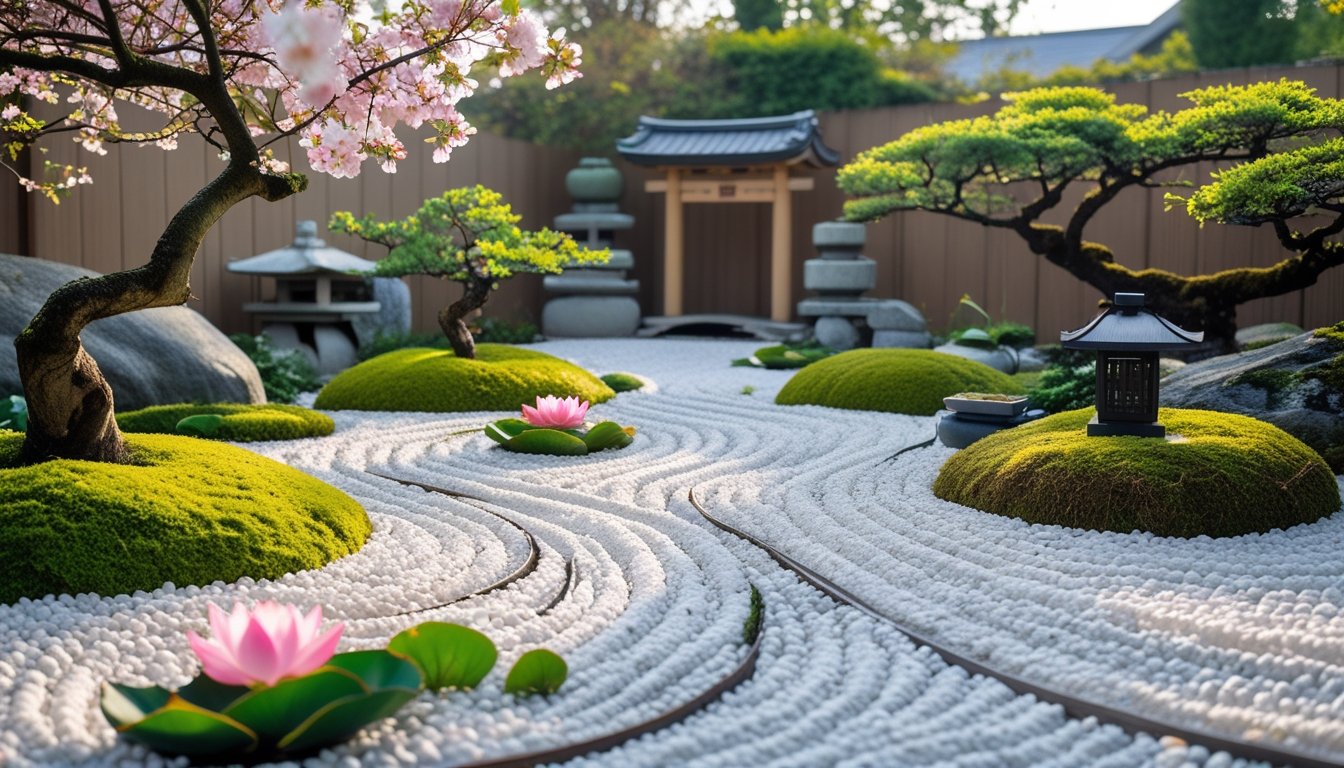
Creating a Zen flower garden involves blending traditional Japanese rock garden elements with the vibrant beauty of flowers, providing a space for tranquillity and reflection. Our approach combines aesthetics with meditation, promoting peace and mindfulness through thoughtful design.
Core Principles of Zen Garden Design
Zen garden design embodies simplicity, balance, and minimalism. Central to the design are three key principles: asymmetry, symbolism, and enclosure. Asymmetry invites intrigue and natural beauty, avoiding rigid patterns. Symbolism uses natural elements to represent broader concepts—rocks might symbolise mountains, while sand patterns mimic water's flow. The principle of enclosure creates a sense of privacy and introspection, which is essential for relaxation and meditation.
Our design can also include raked gravel or sand to establish a sense of flow and movement. The patterns can vary from concentric circles to smooth, flowing lines, each evoking different states of contemplation. The act of raking itself becomes a meditative exercise, removing distractions and encouraging focus.
Selecting the Ideal Location
Choosing the right location is crucial. We must consider spaces with ample natural light and minimal disturbance to foster an atmosphere conducive to reflection. A secluded corner of a garden or a section close to a wall can provide a sense of seclusion essential for a Zen garden. Additionally, elements such as shade, provided by trees like the Japanese maple, enhance the overall ambience.
Proximity to a water source or pathways can also influence our design decisions, allowing the sounds of nature to complement the tranquillity. Ensuring the space has proper drainage will maintain the integrity of gravel and sand elements, critical for maintaining patterns and cleanliness.
Essential Elements: Rocks, Gravel, and Sand
Rocks, gravel, and sand are foundational to our Zen garden's structure. Stone arrangements provide focal points, representing islands or mountains, creating a harmonious balance within the space. We must position them with care, as their placement affects the garden's aesthetics and symbolism.
Gravel and sand extend the serene landscape, with raked patterns encouraging a sense of flow and movement. Different gravel sizes and sand textures can change the visual interest and tactile experience, enhancing meditation. Maintaining these patterns is part of the practice, where raking serves both a functional role and a meditative act.
Incorporating Flowers and Plant Life
Integrating flowers into our Zen garden requires careful selection. Seasonal flowers add colour and life, reflecting the fleeting nature of existence. The inclusion of bonsai trees and succulents can add structure and variety, offering year-round interest without overwhelming the minimalist aesthetic.
Choosing understated and harmonious colours such as whites, pinks, and soft blues can enhance the garden's calming atmosphere. Japanese maple and moss are valuable additions, providing contrast and texture that embody the change of seasons. By incorporating plant life thoughtfully, we create a vibrant yet peaceful retreat that invites ongoing interaction and engagement.
Design Features and Personalisation for a Tranquil Zen Flower Garden
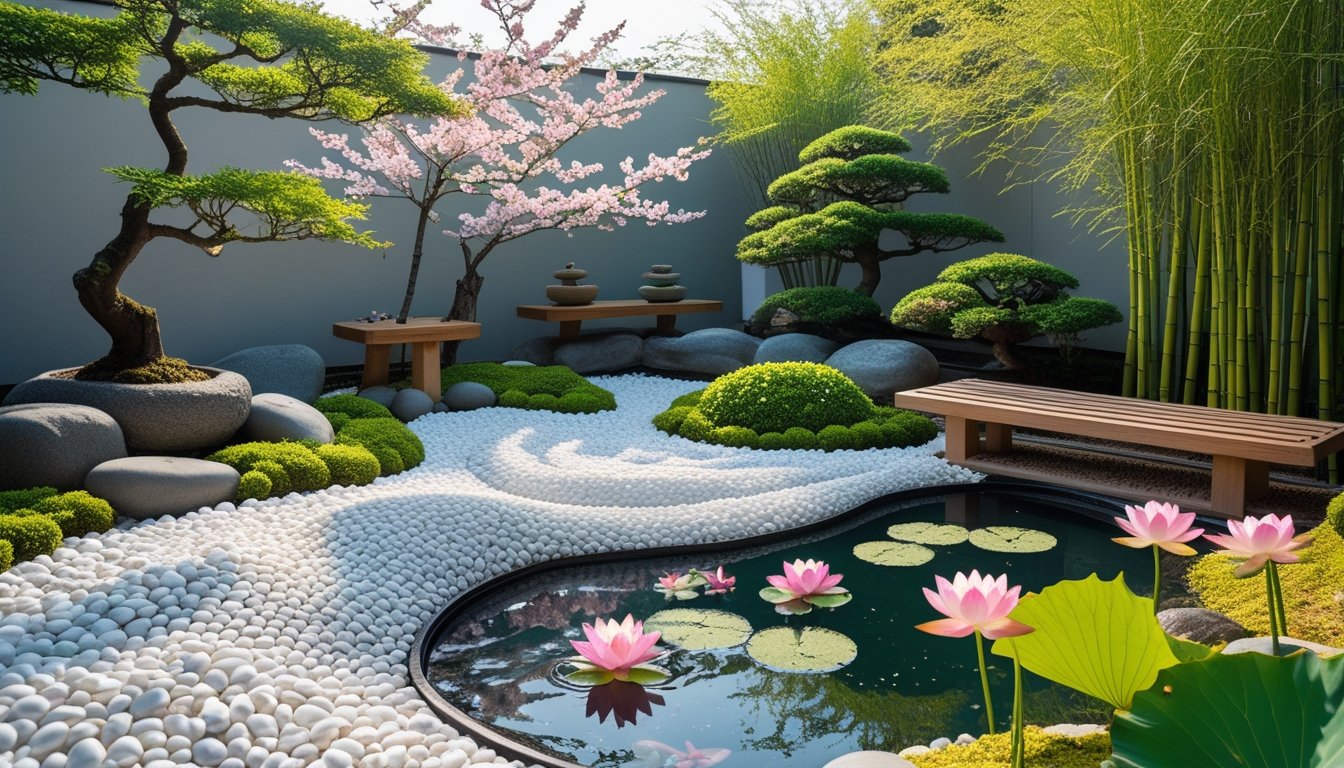
Creating a tranquil Zen flower garden involves carefully considering design features that accentuate calmness and personal touch. Key elements like water features, paths, and decorative lighting are essential for evoking a serene atmosphere.
Using Water Features for Serenity
Incorporating water features into a Zen flower garden can greatly enhance its tranquillity. Traditional options like a bamboo water feature or a tabletop fountain bring a soothing auditory experience. Water gently flowing over rocks or within a bamboo fountain creates an inviting sense of peace.
To diversify, a small pond or miniature waterfall can provide visual interest. These elements also encourage reflection and meditation. By situating water features thoughtfully amidst your flower arrangements, we can ensure they complement the natural beauty and peacefulness of the garden.
Arranging Stepping Stones and Paths
Stepping stones and paths in a Zen garden aren't merely functional; they're integral to the landscape's spiritual flow. A stone path skilfully laid out guides both the movement and the gaze of visitors, fostering meditation as they traverse the garden. Stepping stones can be arranged asymmetrically for a more natural and contemplative layout.
Adding a wooden bridge or minimalist garden bridge offers a transformative journey element. These passages, perhaps flanked by neatly trimmed bamboo plants, define pathways while blending seamlessly with the surrounding flora. Our careful arrangement ensures every step taken is mindful, enhancing the connection with nature.
Incorporating Decorative Elements and Lighting
Decorative pieces like stone lanterns and garden lighting add layers of atmosphere to a Zen flower garden. Traditional stone lanterns not only serve as focal points but also infuse cultural significance, grounding the space in timeless aesthetics.
Garden lighting needs to be subtle. Using soft, ambient lighting can highlight the garden's night-time charm without overwhelming its natural tranquillity. Consider low-energy lights or solar-powered options for a more eco-friendly touch. By selecting particular elements that resonate with our personal style, such as a quaint pagoda or bamboo fencing, we personalise the garden and make it uniquely ours. These choices ensure that as daylight fades, the magic of the garden continues.
Frequently Asked Questions
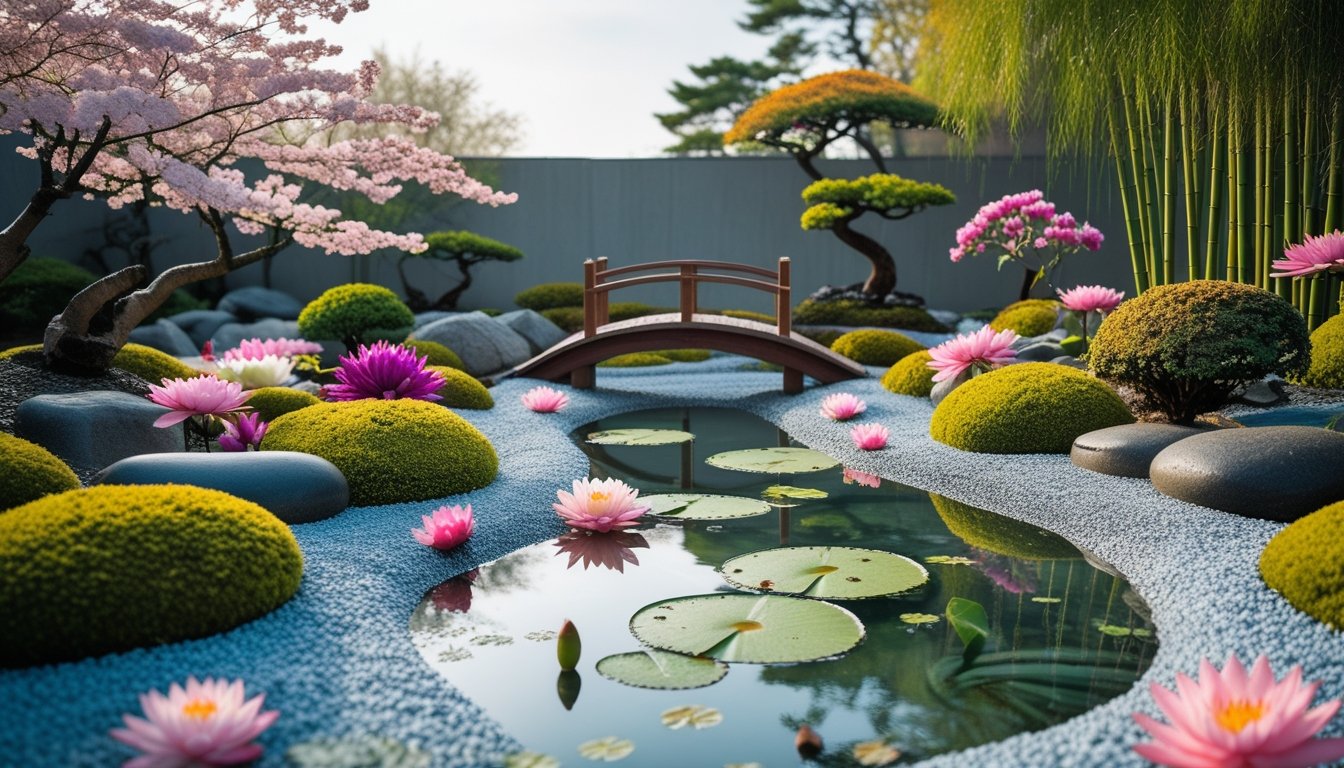
Creating a Zen flower garden involves several thoughtful design choices, from selecting the right elements and plants to incorporating water features and arranging rocks and sand. Maintaining the garden's tranquillity and introducing seating areas are also key components to consider.
What are the essential elements required to design a Zen flower garden for relaxation?
A Zen flower garden emphasises simplicity and tranquillity, focusing on a harmonious blend of natural elements. Key components include carefully selected plants, strategically placed rocks, sand patterns, and subtle water features. These elements together foster a serene environment conducive to relaxation and mindfulness.
How do I select the appropriate plants and flowers for a serene Zen garden setting?
Choosing plants and flowers that complement the calming nature of a Zen garden is vital. We suggest opting for evergreens, bamboo, and moss, as they offer year-round greenery and require minimal maintenance. Consider blooms that add soft colours without overwhelming the senses, such as lavender and azaleas.
What is the significance of water features in a Zen garden, and how can they be incorporated?
Water features play a crucial role in creating a calming atmosphere with their soothing sounds. To integrate them effectively, consider adding a small pond or a subtle waterfall. These features can be enhanced with rocks and plants that seamlessly blend with the garden's design, adding to its peaceful ambiance.
Can you provide advice on the arrangement of rocks and sand to foster a sense of tranquillity in a Zen garden?
The placement of rocks and sand is fundamental to a Zen garden's aesthetics. Arrange rocks in odd numbers to create natural focal points, symbolising mountains or islands. Use sand to form simple, flowing patterns around them, mimicking water or waves, and maintain these patterns with regular raking to preserve the garden’s serenity.
What maintenance considerations should be kept in mind to preserve the peaceful ambiance of a Zen flower garden?
Regular upkeep is necessary to sustain a Zen garden's tranquillity. This includes pruning plants, raking sand, and cleaning water features. Keeping pathways clear and ensuring rocks remain undisturbed will also help maintain the garden’s serene atmosphere all year round.
Could you suggest techniques for harmoniously integrating seating areas into a Zen garden?
Seating areas should seamlessly blend into the garden's design without disrupting its peaceful vibe. Choose natural materials like stone or wooden benches that complement the surroundings. Position them where visitors can enjoy the garden's beauty and contemplate peacefully, perhaps with a view of a water feature or a striking arrangement of rocks.