
Late updated: 02 Nov 2025 10:11
Written by: James Whitaker
Garden Birdwatching Tips For Beginners: A Simple Guide
Embarking on a birdwatching journey from the comfort of our garden can be a delightful experience that deepens our connection with nature. With just a bit of preparation and the right approach, we can transform our backyard into a haven for observing a variety of beautiful bird species. Whether we're seasoned birdwatchers or beginners starting out, the garden offers a perfect setting to develop our skills and observation techniques.
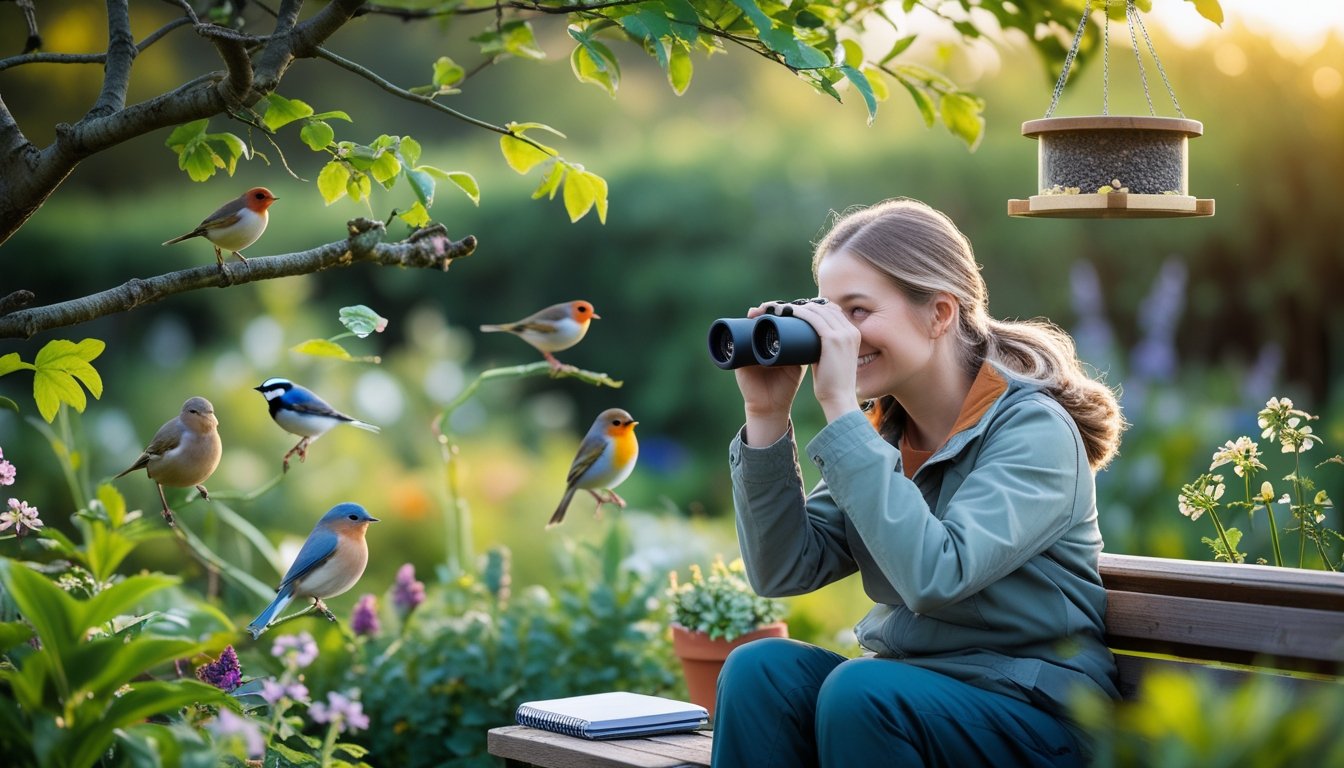
By making a few simple changes, we can attract a host of feathered friends to our garden. Choosing the right plants and adding feeders can encourage visits from a variety of birds. Observing them in their natural habitat teaches us the subtleties of bird identification and behaviour. These encounters not only make our garden a livelier place but also create opportunities to learn and connect with the world around us.
Our journey into garden birdwatching can also serve as a relaxing pastime. Not only do we learn about the birds themselves, but the process offers a chance for calm and reflection amidst the busyness of life. This engagement with nature enhances our mental well-being and strengthens our appreciation for wildlife.
Key Takeaways
- Gardening methods can attract diverse bird species.
- Observing birds develops identification and behavioural skills.
- Birdwatching offers peaceful interaction with nature.
Essential Garden Birdwatching Tips
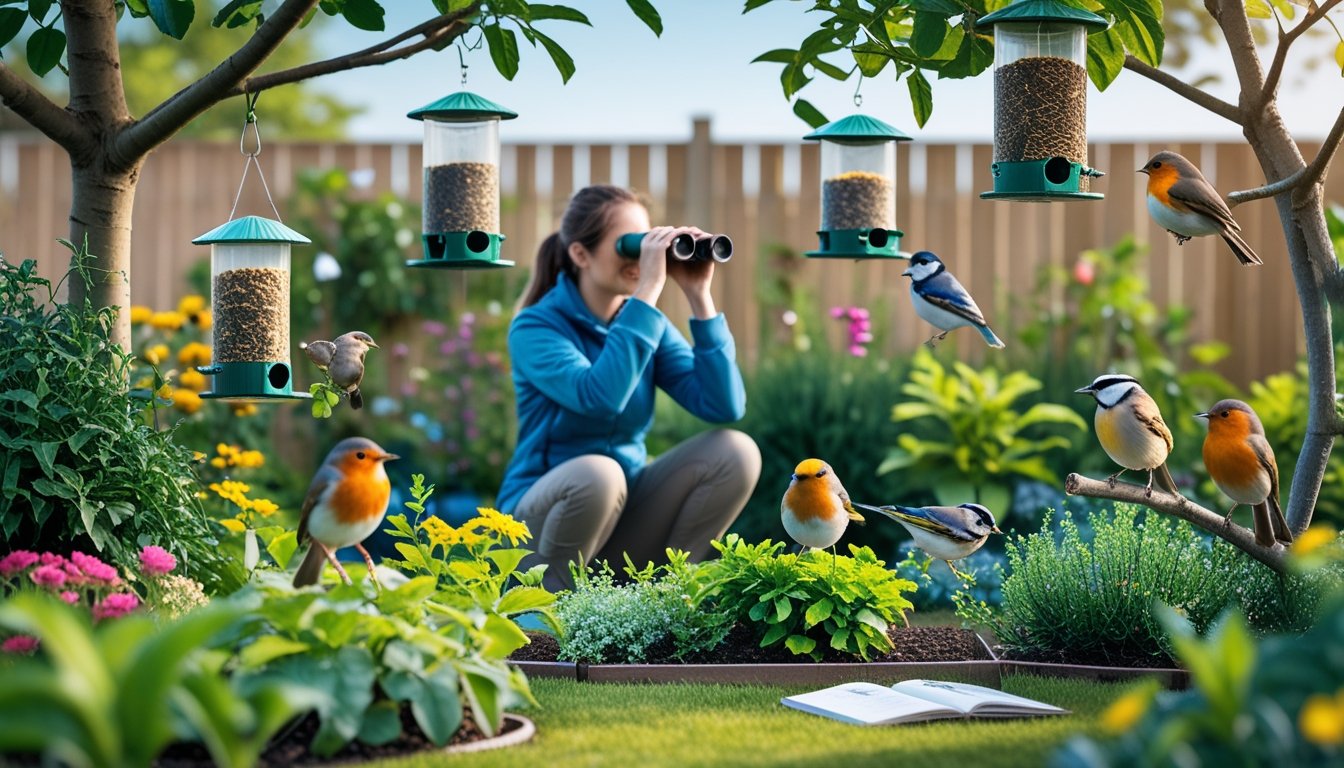
To become proficient in garden birdwatching, it's key to choose prime locations, understand basic identification techniques, and have the right equipment. These elements will enhance the experience and success in spotting a variety of bird species.
Choosing the Best Birdwatching Locations
When selecting a location for birdwatching, local parks and gardens are fantastic choices. These areas often provide varied habitats that attract different bird species. It’s wise to pick locations with a mix of trees, shrubs, and open spaces. This diversity in vegetation offers birds food, shelter, and nesting opportunities.
Moreover, some parks are known birding hotspots with dedicated birdwatching trails. These paths often lead to viewing areas where birds are accustomed to human presence, making them easier to observe. It is beneficial to visit during early morning or late afternoon when birds are most active.
Fundamental Bird Identification Techniques
Identifying birds effectively involves a combination of techniques. Observing colour patterns, shapes, and behaviour is vital in recognising different species. A good field guide can be invaluable for comparing these traits and confirming bird identities.
For those who prefer a digital approach, bird identification apps like Merlin Bird ID are excellent tools. These apps often feature comprehensive databases and interactive features to help identify birds based on photos or by answering a few questions.
Listening to bird songs can also be an effective way to identify species, as many birds have distinct calls. Practising regularly will hone our identification skills, making it easier to quickly recognise familiar birds.
Recommended Equipment for Beginners
To ensure a rewarding birdwatching experience, appropriate equipment is essential. Quality binoculars specifically designed for birdwatching enhance our ability to see birds clearly without disturbing them. When choosing binoculars, consider factors such as magnification and lens diameter; a common choice is 8x42, which balances clarity and comfort.
Field guides or birdwatching apps provide quick reference material and are invaluable for beginners. They offer detailed information on bird species, helping us identify and learn about the birds we observe.
Providing clean water sources such as bird baths can encourage birds to visit our gardens. These simple additions can make a significant difference in attracting and retaining birds, allowing for extended observations and enjoyment.
Attracting and Observing Garden Birds
Our gardens can become a lively sanctuary for birdwatching with some practical strategies. Setting up proper feeding stations and understanding bird communication can enhance this rewarding experience. Additionally, joining birdwatching groups can offer broader insights and deeper connections with nature.
Setting Up Bird Feeders and Bird Baths
Bird feeders are essential in attracting a variety of species to our gardens. We can choose feeders based on the types of seeds they hold, such as sunflower seeds or mixed grains, which appeal to different birds. Additionally, suet and mealworms serve as excellent options for feeding and can attract a wide range of birds.
Bird baths are equally important as feeders, providing clean water for drinking and bathing. Placing the bath in a visible yet safe location, away from predators, increases its utility. Changing the water regularly is crucial to prevent the spread of diseases. By monitoring our garden's feeding dynamics, we can adjust the placement and types of feeders and baths to attract diverse bird species effectively.
Understanding Bird Songs and Calls
Bird songs and calls serve as the primary means of communication for birds and provide us with clues about their presence and behaviour. A pleasant morning chorus often signifies the start of breeding seasons. Our ability to recognise these sounds can significantly enhance our birdwatching skills.
We might encounter unique patterns in their songs, which can be matched to specific species using apps or audio guides. Identifying the purpose behind different calls, like warning or mating calls, offers insights into avian behaviour. Engaging with these vocal cues also enhances our enjoyment and appreciation of observing birds in their natural habitat.
Joining Birdwatching Walks and Clubs
Participating in birdwatching walks and joining clubs connects us with like-minded enthusiasts. These groups offer guided walks focusing on local bird identification, their habitats, and behavioural patterns. The experience of being part of a birdwatching club can broaden our knowledge and introduce us to species we might not typically encounter.
Websites like eBird help us track observations and contribute to citizen science projects, enriching our experience. These communities often host events and photography sessions, deepening our engagement with wildlife. By becoming active members, we can continuously learn and share valuable experiences with other birdwatchers.
Frequently Asked Questions
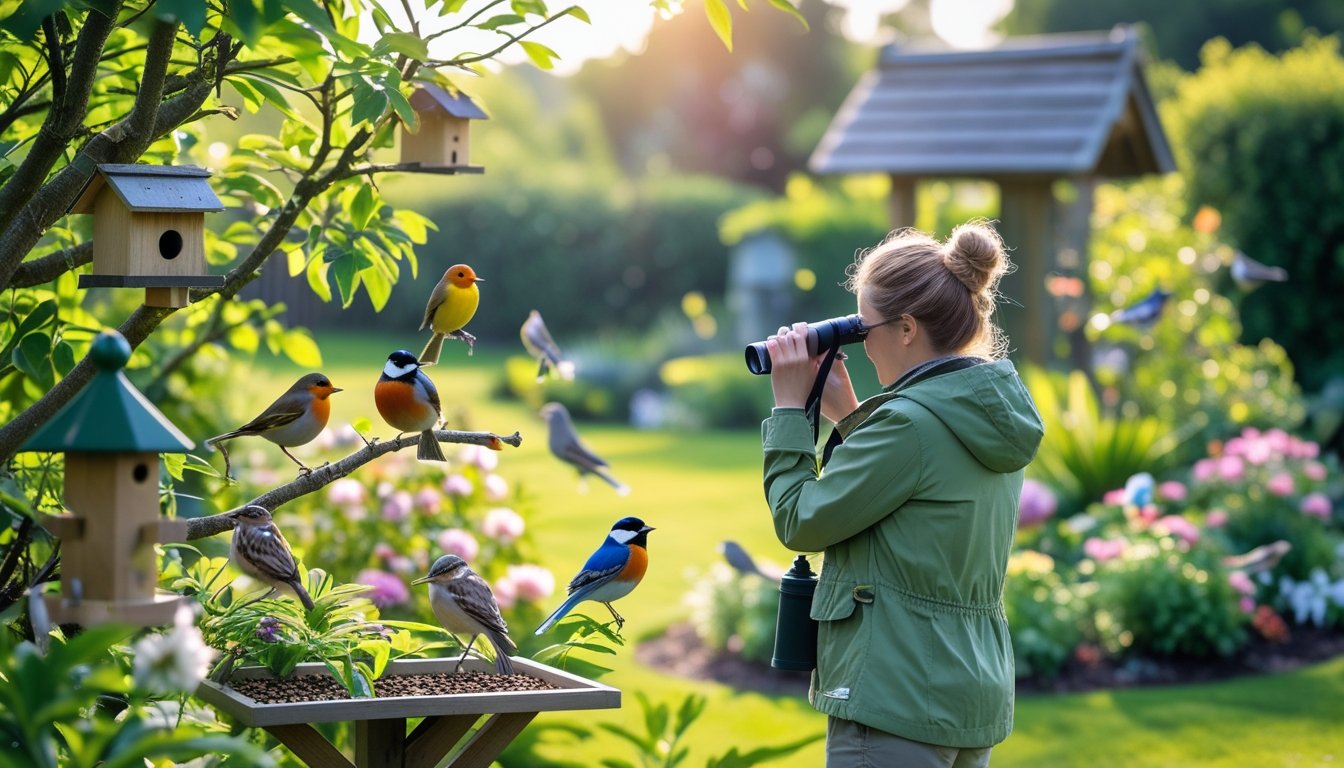
In garden birdwatching, selecting the right food, feeders, and ensuring a safe habitat are essential for attracting diverse birds. Additionally, correctly identifying species and observing responsibly can enhance your experience. Timing your activities effectively also contributes to successful birdwatching.
What types of food should I provide to attract a variety of birds to my garden?
Providing a mix of seeds, fruits, nuts, and suet will attract different bird species. Sunflower seeds are popular with many birds, while nyjer seeds can attract finches.
How can I identify different bird species commonly found in UK gardens?
Investing in a good bird guide specific to UK species can be invaluable. Using an app, such as Merlin or RSPB Bird Identifier, can also help match images or bird songs. Paying attention to key features like size, colour, and behaviour makes identification easier.
What kind of bird feeders are most effective for attracting birds?
Tube feeders, platform feeders, and suet cages each serve different species. Tube feeders are great for small birds like tits, while platform feeders accommodate larger birds such as blackbirds.
How can I create a safe and inviting habitat for birds in my garden?
Ensure your garden has natural foliage, water sources, and nesting areas. Avoid pesticides which can harm birds. Consider native plants that provide natural food sources and shelter.
When is the best time of day for birdwatching in my garden?
Early morning and late afternoon are usually the best times. Birds are more active during these periods as they forage for food.
What steps should I take to responsibly observe and not disturb garden birds?
Maintain a respectful distance and use binoculars for closer views. Keep pets indoors to reduce stress on birds. Noise should be minimised to avoid startling them. By maintaining these practices, we can ensure a rich and respectful birdwatching experience.