
Late updated: 13 Dec 2025 08:12
Written by: James Whitaker
Sustainable Gardening Tips For Beginners: Essential Techniques for Eco-Friendly Gardens
Gardening is a rewarding hobby that connects us with nature, offering both relaxation and the satisfaction of growing our own plants. For beginners, sustainable gardening can seem challenging, but it simply means adopting practices that minimise environmental impact while promoting biodiversity and ecological balance. By focusing on eco-friendly techniques, we can nurture beautiful and productive gardens that benefit both us and the planet.
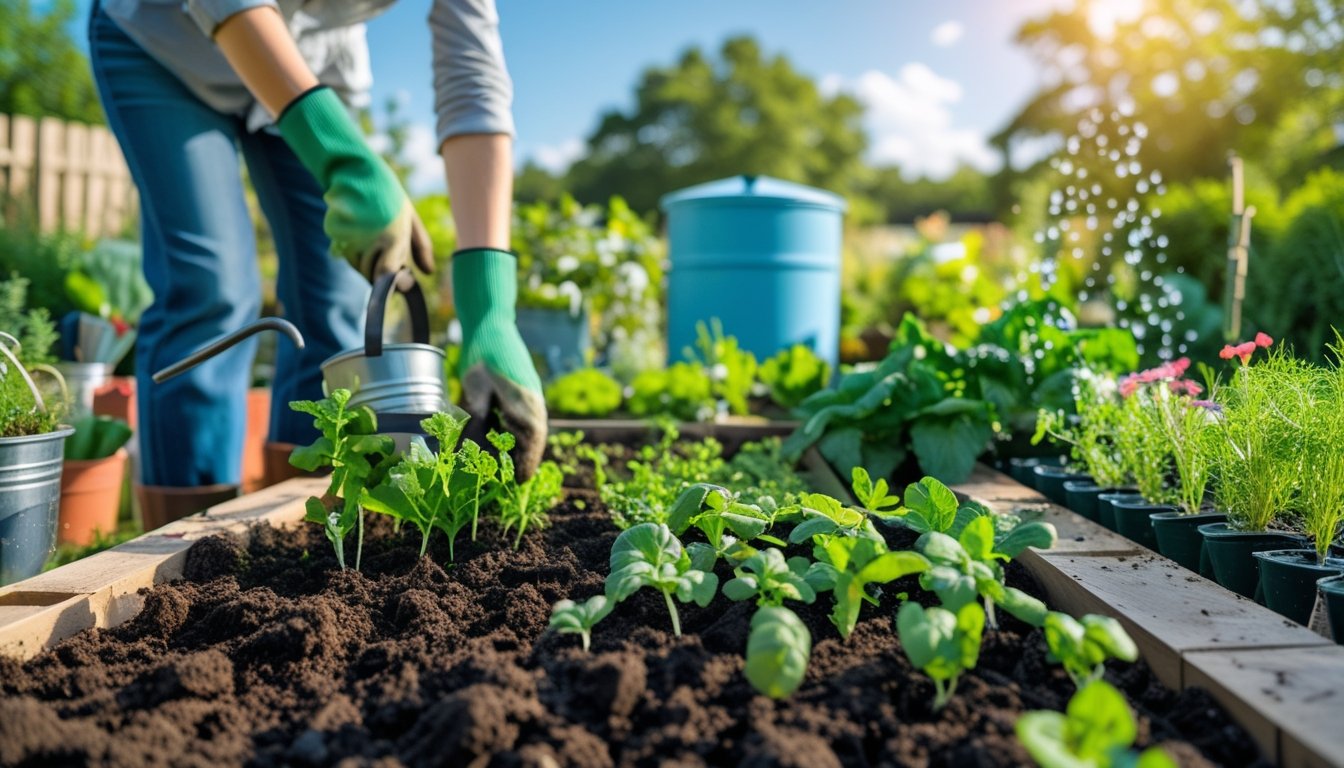
Sustainable gardening doesn't require a large plot of land or expert knowledge. Even small spaces can become lush, thriving gardens with a bit of creativity and commitment. By embracing practices like composting, water conservation, and choosing native plants, we can significantly reduce waste and conserve natural resources. This approach ensures our gardens remain healthy and productive, providing us with homegrown produce and a haven for local wildlife throughout the year.
As we embark on this journey, it’s crucial to understand the core principles that guide sustainable gardening efforts. From efficient irrigation methods to natural pest control, these tips are designed to help beginners create green spaces that are resilient and low-maintenance. Join us as we explore how to cultivate a garden that's not only beautiful and functional but also environmentally responsible.
Key Takeaways
- Adopt eco-friendly practices for a balanced garden.
- Small spaces can support sustainable gardening.
- Use natural methods for resilience and health.
Core Principles of Sustainable Gardening
In sustainable gardening, mindful practices are employed to maintain a harmonious relationship with nature. By prioritising biodiversity, resource conservation, and eco-friendly techniques, we can cultivate thriving garden ecosystems that benefit both us and the planet.
What Is Sustainable Gardening?
Sustainable gardening is the practice of cultivating plants in a manner that promotes environmental health. Unlike conventional gardening, which may rely heavily on synthetic chemicals and increased water usage, sustainable methods aim to reduce resource consumption. This approach not only supports the environment but also leads to a more resilient garden. By using these techniques, we can create gardens that are in harmony with nature, ensuring that our plant-raising efforts contribute positively to the ecological balance. Through sustainable gardening, we can offer a habitat for diverse species, enhancing biodiversity and creating a thriving ecosystem that supports various forms of life.
Environmental Impact and Benefits
The environmental impact of sustainable gardening is significant. When we switch to organic and low-impact practices, we contribute to preserving local ecosystems. Sustainable gardens encourage biodiversity by providing habitats for beneficial insects, birds, and other wildlife. This results in gardens that successfully maintain natural pest control methods, reducing the need for harmful pesticides. Moreover, using these techniques helps conserve water and improve soil health, which in turn fosters a healthier garden environment. By practicing sustainable gardening, we not only enjoy a bountiful garden but also play a crucial role in environmental stewardship, ensuring that our gardening practices support and nurture the broader ecological community.
Key Elements for Success
Key elements of a successful sustainable garden include mindful water use, soil health management, and plant selection. Using drip irrigation or rainwater harvesting systems can optimise water usage significantly. For soil health, we recommend composting kitchen scraps and garden waste to enrich the ground naturally. Choosing native plants suited to local climate conditions is crucial, as they require less water and care, thus reducing resource strain. Encouraging a mix of plant species can further enhance biodiversity and create a more resilient garden ecosystem. By incorporating these elements, we ensure that our gardens flourish while staying true to sustainable principles, enabling us to enjoy a beautiful and eco-friendly garden space.
Foundational Tips for Beginners
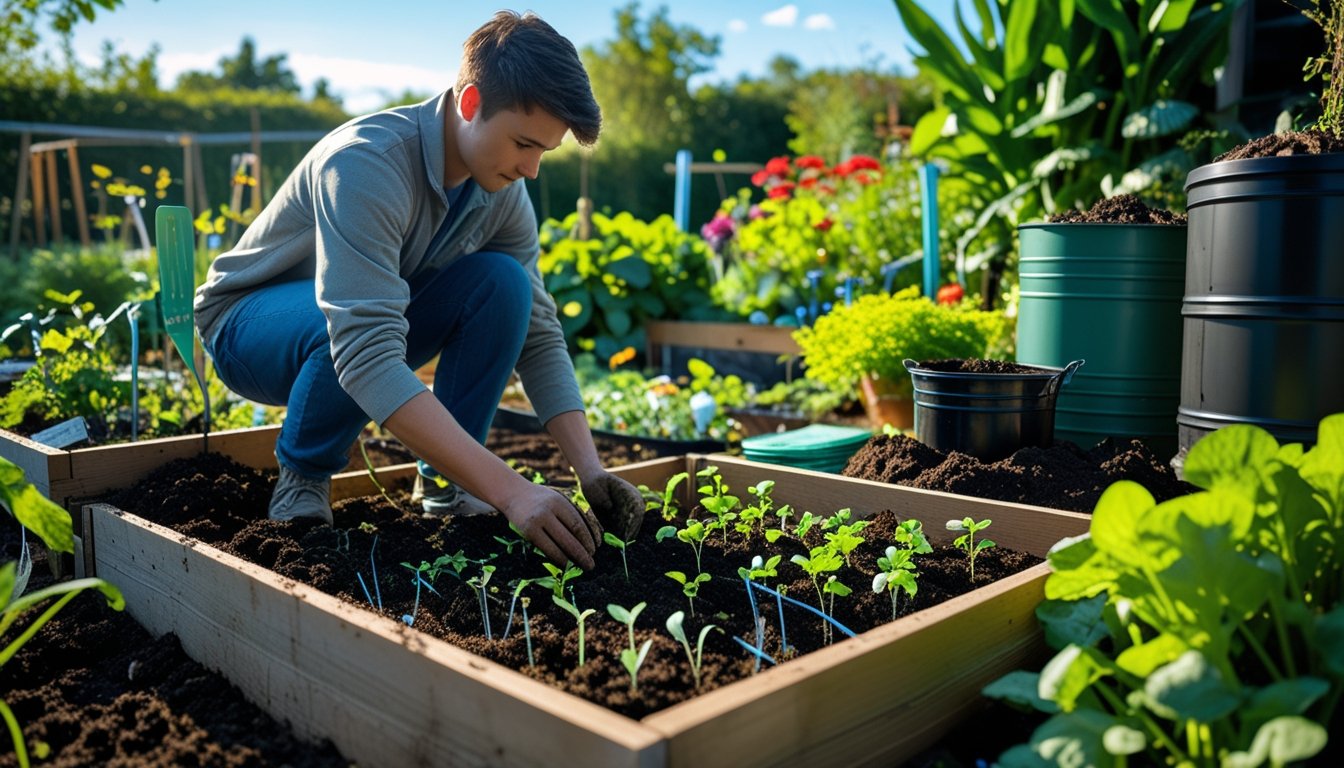
Creating a sustainable garden begins with establishing a solid foundation. This means focusing on several key areas: building soil health, conserving water efficiently, selecting appropriate plants for our climate, and managing pests in an eco-friendly way.
Building Healthy and Fertile Soil
Building healthy soil is crucial for a thriving garden. To achieve nutrient-rich, fertile soil, we should start composting. Composting involves using kitchen scraps and yard waste, which break down into a rich organic matter that nourishes plants. By setting up a simple compost bin or pile, we can continuously enrich our soil.
To enhance soil structure and fertility, it's essential to conduct regular soil testing. Knowing the pH levels and nutrient content helps us make informed decisions on soil amendments. Adding organic matter like manure or worm castings from a worm bin can boost soil health. Using mulch, such as biodegradable or organic mulch, conserves moisture and moderates soil temperature, further supporting plant growth.
Water Conservation and Efficient Irrigation
Efficient water use is paramount in sustainable gardening. Implementing a drip irrigation system or using a soaker hose can significantly reduce water usage by delivering moisture directly to the root zones. We should also consider installing rain barrels to harvest rainwater, a simple step towards reducing our reliance on traditional water sources.
Moisture meters or sensors can help us monitor soil hydration levels, ensuring that water is used judiciously. By conserving water through these methods, we not only save on resources but also create a garden that can thrive during periods of drought.
Selecting Native and Climate-Appropriate Plants
Choosing the right plants is vital for creating a sustainable garden. Native plants are adapted to our local climate and soil conditions, requiring less water and maintenance. They also support local wildlife and maintain ecological balance. Drought-tolerant plants and hardy perennials are excellent choices for ensuring year-round productivity with minimal care.
Incorporating a variety of native species fosters biodiversity and strengthens plant communities, which enhances the garden's resilience against climatic variations. Selecting shrubs that suit our region's temperature and rainfall patterns further supports sustainable growth.
Eco-Friendly Pest and Disease Management
Managing pests while maintaining ecological balance involves adopting natural pest control methods. Encouraging beneficial insects like ladybugs and lacewings to inhabit our garden helps control pest populations. Companion planting, which involves cultivating plants that naturally deter pests or attract beneficial insects, is an effective strategy.
Using organic pest control solutions, such as insecticidal soap or neem oil, can safely address infestations without harming the environment. Additionally, implementing plant partnerships and maintaining plant resistance through diverse planting can prevent diseases naturally, keeping our garden healthy and productive.
Frequently Asked Questions
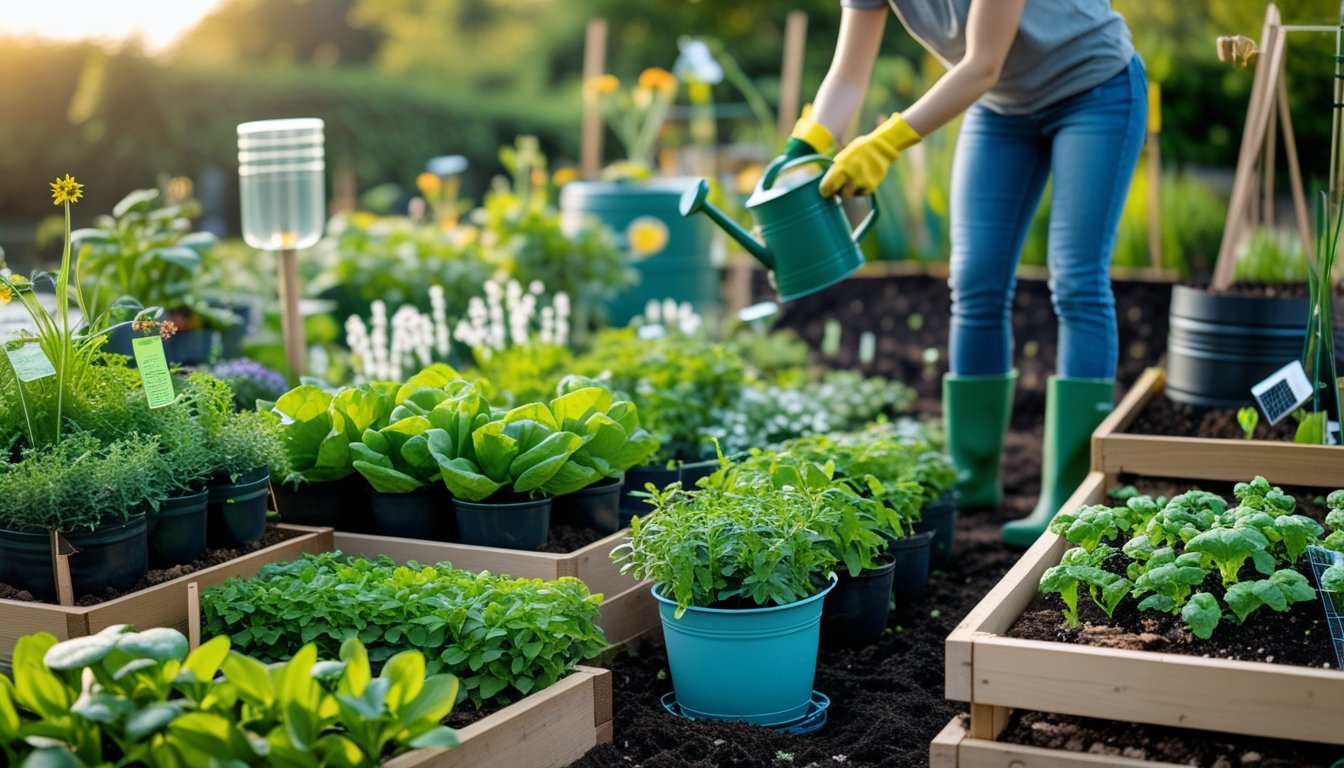
In sustainable gardening, there are several techniques we can adopt to create an eco-friendly space. Whether it’s starting a compost pile, selecting hardy plants, or using efficient watering methods, each practice contributes to a resilient and vibrant garden.
How can I begin composting at home for my garden?
Starting a compost at home involves collecting kitchen scraps like vegetable peels and coffee grounds. We simply layer these with yard waste such as dried leaves and grass clippings. Regularly aerating the pile can accelerate decomposition, transforming scraps into nutrient-rich compost.
What are the most water-efficient irrigation methods for new gardeners?
New gardeners should consider drip irrigation systems, which deliver water directly to the roots. Rainwater harvesting is another sustainable option, allowing us to utilise collected rainwater for irrigation.
Which plants should I start with for a low-maintenance, eco-friendly garden?
Opt for native plants suited to your region as they require less water and care. Leafy greens like lettuce also thrive with minimal effort and space, making them perfect for beginners.
How do I create and maintain healthy soil organically?
We can improve soil health by adding organic matter, like compost or well-rotted manure. Avoid using chemical fertilisers and instead rely on natural amendments to nurture the soil ecosystem.
What practices should I follow to effectively practice crop rotation?
Rotate plant families across different plots each season to prevent nutrient depletion and reduce pest build-up. Planning crop sequences ensures balanced soil fertility and can improve yields over time.
Which types of mulch are best for conserving water and suppressing weeds?
Organic mulches such as straw, wood chips, or pine needles are excellent for conserving moisture. These materials also help suppress weeds by blocking sunlight and breaking down to enrich the soil.